

AHA PALS Parts 2 and 3 Hands On Skills Session
American Heart Association
$100.00
(2 reviews)

Write a Review

American Heart Association
AHA PALS Parts 2 and 3 Hands On Skills Session
This American Heart Association (AHA) 2025 Pediatric Advanced Life Support (PALS) Skills Checkoff Session is a Blending Learning Course where the student will first complete the online course and bring the completion certificate to the in-person practice and testing session called a Skills Session or PALS Skills Checkoff.
Log in or create an account at elearning.heart.org and purchase the HeartCode PALS for $173 here: https://elearning.heart.org/course/1601
The Online course is not included in the cost of the in person skills checkoff.
Be sure to download all the documents for your class right after purchase!
What Happens in a PALS Skills Session
Skills Practice: You’ll practice individual skills such as high-quality CPR, airway management, effective ventilation, defibrillation (if appropriate), and other interventions.
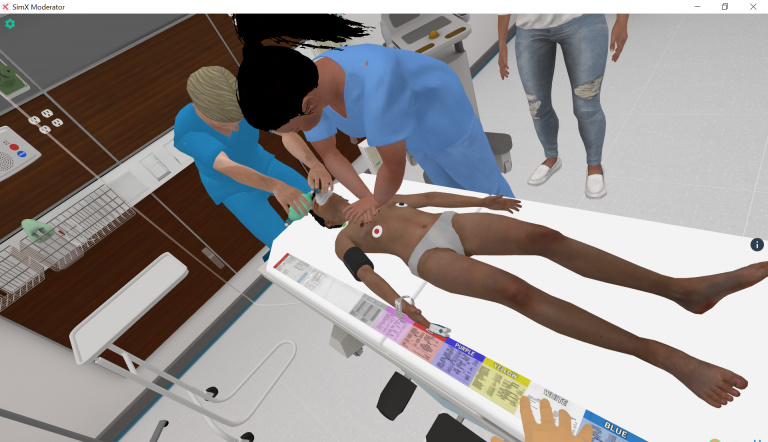
Team Scenarios: Participants often engage in simulated scenarios where they must work as a team to identify problems (shock, arrhythmias, etc.), make decisions, and perform life-saving procedures. This helps with not just technical skills but also communication, timing, leadership within an emergency response context.
Debriefing / Feedback: After scenarios or skills practice, instructors provide feedback, correct mistakes, and reinforce best practices. This is crucial for learning.
Skills Testing / Validation: There is usually an evaluation of your performance of required skills to ensure competency. Failing or weaker parts may require repeat attempts. The skills test ensures that learners meet the standard needed for safe pediatric life support.
After you have successfully completed your class you will be issued an American Heart Association PALS Provider E-Card. This will be delivered to your email address from ecards@heart.org. You will then need to open the email and follow the instructions to claim your card.
This AHA PALS Skills Checkoff - Pediatric Advanced Life Support is a course created by the American Heart Association. This 2 hour classroom course is designed for those who work in an advanced medical setting, including Doctors, Nurses, and Paramedics. This Skills Session is done after completion of the online course Heartcode PALS e-learning course. The online portion is part 1 of the course, and the Skills Session is part 2 (practice) and part 3 (testing). Upon completion of all three parts of the course a 2-year AHA PALS certification will be awarded.
There are three parts to completing your PALS Certification.
1). Go to www.elearning.heart.org and create an account or log in. Purchase the Heartcode PALS online for $171. https://elearning.heart.org/course/439
2). Complete the online course which is Part 1. Print, or take a picture of your certificate and bring it with you to the skills session.
3). Purchase the PALS Skills Session for $100 on this website. The in-person skills session is Part 2, which is the practice and Part 3 which is the hands on testing portion where you will be a team leader in a scenario and perform one respiratory case for a patient with a pulse. During this course you may also complete your BLS written test and hands on testing at no additional charge, to obtain your PALS and BLS cards.
Upon successful completion of the course, your AHA PALS/BLS Provider cards will be issued via email right after your class.
HeartCode® PALS is an online comprehensive eLearning program that uses eSimulation technology to allow students to assess and treat patients in virtual healthcare settings. In this environment, students apply their knowledge to real-time decision-making and skills development.
To enter the course, students must complete the PALS Precourse Self-Assessment. Students are then presented with 12 In-hospital patient cases and a team dynamics lesson. Cases may be repeated as many times as necessary to pass. Upon successful completion of all the patient cases, students must pass the multiple-choice exam with a minimum score of 84%.
Students who successfully complete the online portion of the course receive a certificate granting them access to a PALS Hands-on Session with an AHA PALS Instructor. Students must successfully complete both the online portion and the hands-on session to receive a PALS Provider course completion card.
Here's a sample Respiratory Case Scenario
See our live calendar of classes here:
https://www.keepandshare.com/calendar/show.php?i=2091851&vw=month&ign=y
If you have a current AHA PALS card and need a renewal class, you can also visit
https://savingamericanhearts.com/aha-acls-renewal/
If you have an expired AHA PALS card and need an initial provider class, you can also visit
https://savingamericanhearts.com/aha-pals-provider/
Here's a link to our calendar: https://www.keepandshare.com/
and to our Refund Policy: https://savingamericanhearts.com/refund-policy/
Related Products
-
-
AHA ACLS Skills Session Heartcode ACLS Part 2 and 3 (INCLUDES FREE BLS!)
$100.00American Heart Association
-
-


Reviews
-
PALS Skills
The course was excellent. Hands on with dummies/simulations. Incredibly practical information provided in a tangible way.
-
Pals
Thanks